Phillips Geneva XXIV: Journe Results for Dealers
Phillips Geneva XXIV hit US$112.3M with all 217 lots sold. Journe led at CHF 8.68M. What the November 2026 results mean for dealers.

By Dejan Zoric
6 min read
The short answer
Phillips' Geneva Watch Auction XXIV on 7 and 8 November 2026 became the first live watch auction to pass US$100 million, finishing at US$112.3 million (CHF 92.0 million) with all 217 lots sold and 24 world records. An F.P. Journe Chronomètre à Résonance 'Régence' led at CHF 8,680,500 including buyer's premium, and the 13 Journe lots totalled CHF 31.8 million. For dealers the lesson is to compare against hammer prices, treat estimates as opinions, and treat hot independents as a sold-order play rather than stock to flip.
Key takeaways
- Sale total: US$112.3 million (CHF 92.0 million), the first live watch auction above US$100 million.
- White-glove result: all 217 lots sold, with 24 world records and 17 lots above CHF 1 million.
- Thirteen F.P. Journe watches totalled CHF 31.8 million; the 'Régence' led at CHF 8,680,500 with premium.
- Buyer's premium ran up to 27%, so the headline is not the comp.
- Journe is hot, but this is a sold-order play: don't stock it to flip dealer to dealer unless you got a real deal.
- The play right now is to quietly diversify as a dealer, with knowledge first and sourced against real demand.
On this page
Phillips' Geneva Watch Auction XXIV closed on 8 November 2026 as the first live watch auction to pass US$100 million. The two-day sale made US$112.3 million (CHF 92.0 million / €100.8 million), sold every one of its 217 lots, and set 24 world records.[9] An F.P. Journe Chronomètre à Résonance "Régence" led the room at CHF 8,680,500 including buyer's premium, and the 13 Journe lots alone totalled CHF 31.8 million.[9] [1]
The facts
All lot figures below are auction results from the 7 and 8 November 2026 sessions. Hammer excludes buyer's premium; "with premium" includes it.
| Lot | Watch | Estimate (CHF) | Hammer (CHF) | With premium (CHF) |
|---|---|---|---|---|
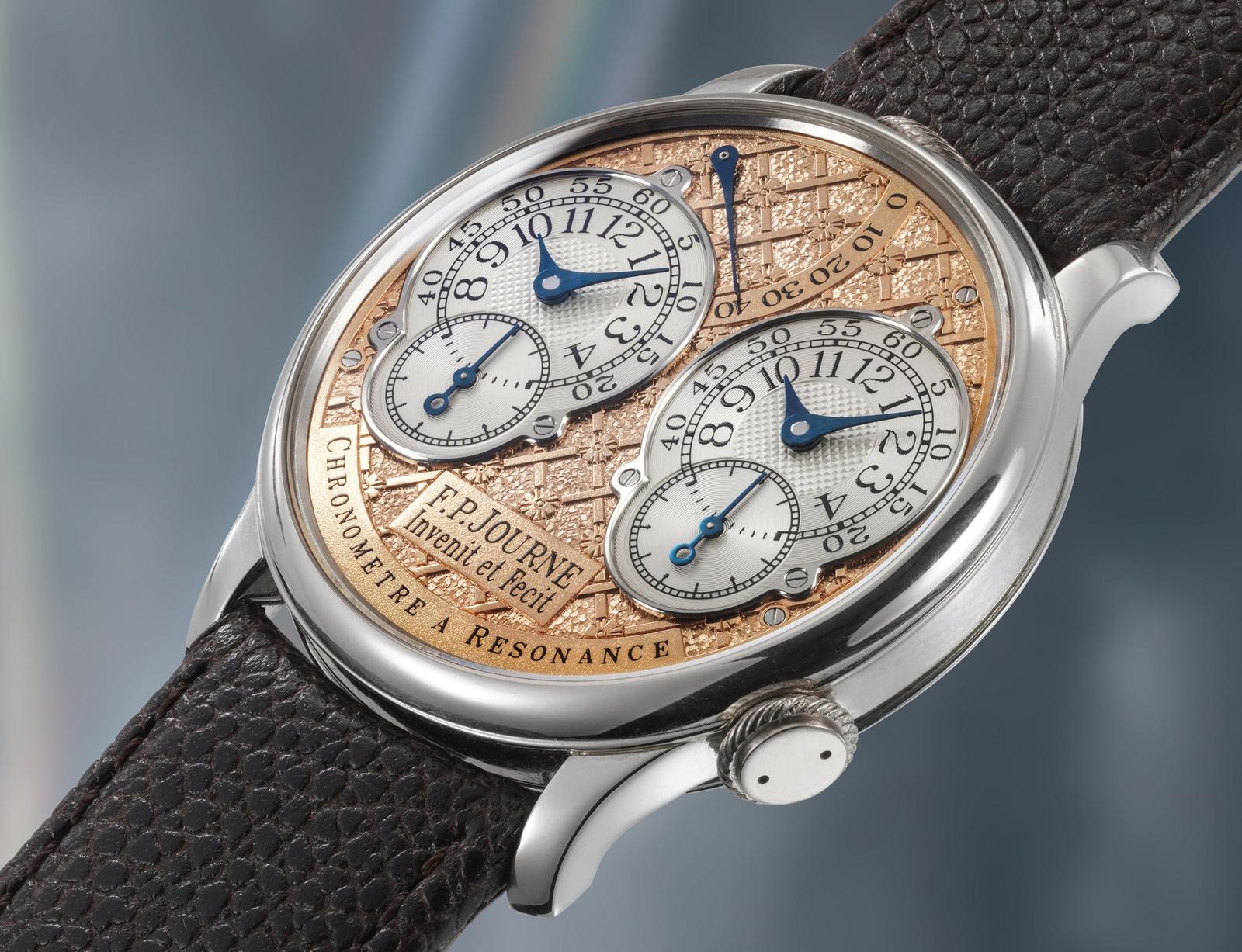
| 7 | F.P. Journe Chronomètre à Résonance "Régence", platinum, 2002 | from 1,000,000 | 7,100,000 | 8,680,500 |
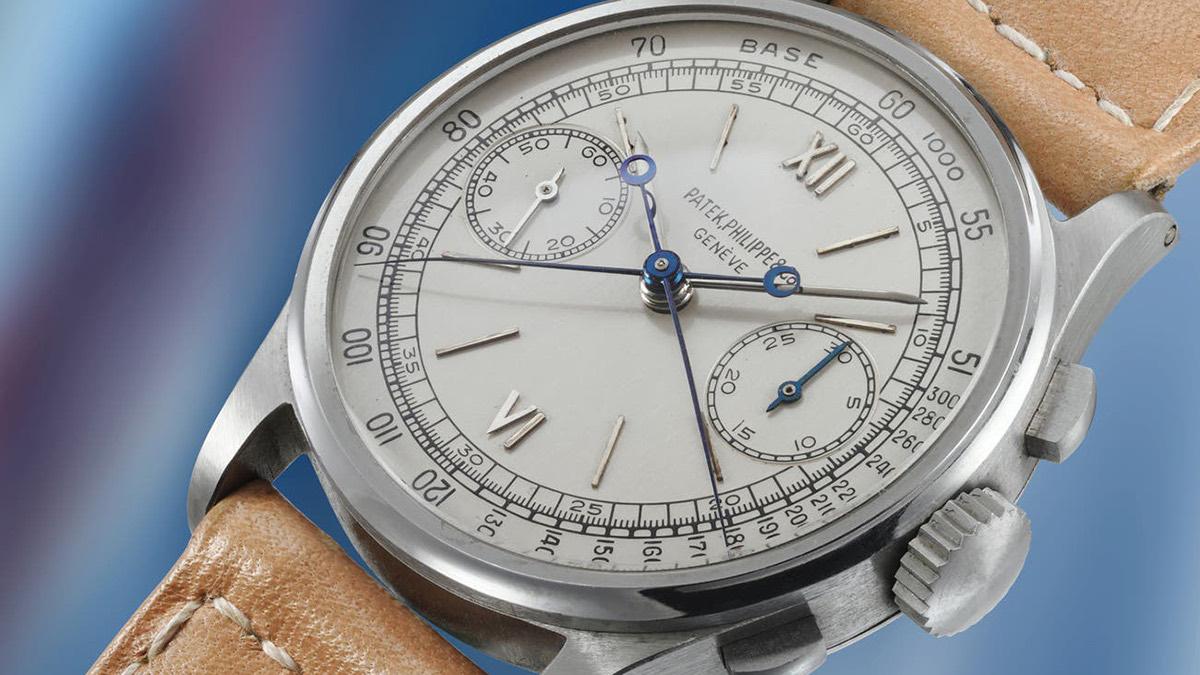
| 95 | Patek Philippe Ref. 1436 split-seconds, steel, 1945 | 2,000,000 to 4,000,000 | 5,100,000 | 6,267,000 |
| 161 | F.P. Journe Chronomètre à Résonance "Tokyo Boutique", titanium | 400,000 to 800,000 | n/a | 6,146,000 |
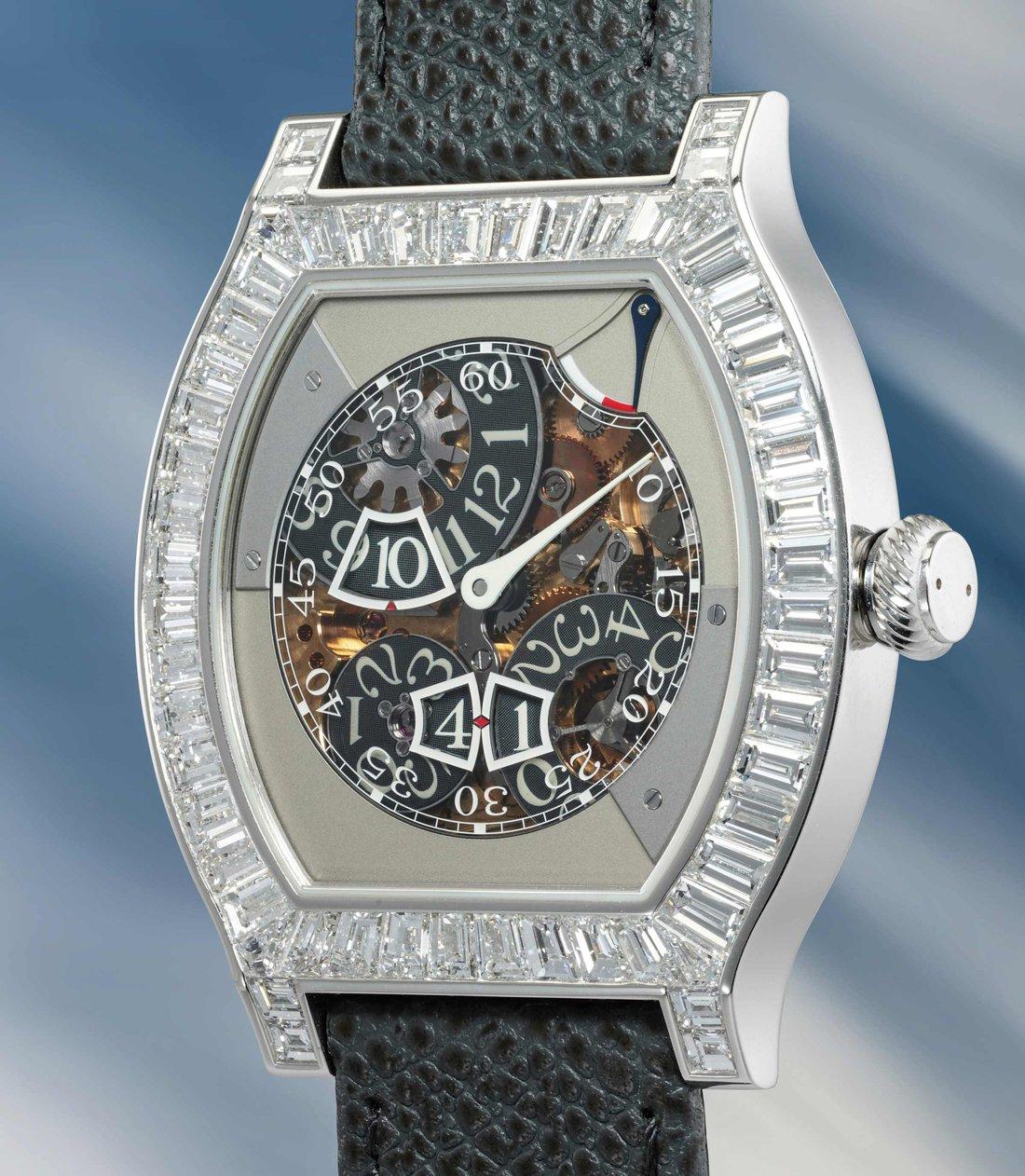
| 60 | F.P. Journe Vagabondage III, platinum and diamonds, 2019 | 350,000 to 700,000 | 4,100,000 | 5,057,000 |
| 106 | Philippe Dufour Simplicity, platinum, 2004 | 350,000 to 700,000 | 1,550,000 | 1,968,500 |
| 20 | Rolex Daytona Ref. 6241 "John Player Special" | 800,000 to 1,600,000 | 1,500,000 | 1,905,000 |
[1] [2] [3] [9] Phillips' 15 September release listed the Régence at CHF 1 million to 2 million; the sale page later showed "in excess of" CHF 1 million.[4] [1] The Régence has the only shiny pink gold dial of the two watches delivered from a planned five-piece series.[4] [9]
A few more facts that matter for context:
- The total: US$112.3 million (CHF 92,045,568), the first live watch auction above US$100 million and the highest watch auction total on record.[9]
- Sell-through: 217 of 217 lots sold, 100% by lot and by value. Seventeen lots cleared CHF 1 million. Average by lot was over US$500,000.[9]
- Journe as a block: 13 watches made CHF 31.8 million (US$38.8 million). After the Régence came the Tokyo Boutique Résonance at CHF 6,146,000 and the diamond-set Vagabondage III at CHF 5,057,000.[9]
- The format: Session I covered lots 1 to 107 on November 7, and Session II lots 108 to 221 on November 8.[5] [3]
- The Patek: the Ref. 1436 was made in roughly 140 examples over about 33 years, and only two steel examples are known.[2] [8]
- The premium tiers: 27% of the hammer up to CHF 1.6 million, 21% from there to CHF 7 million, and 14.5% above CHF 7 million.[5] [1]
- The room: 2,121 registered bidders from 69 countries.[9]
What it means for dealers
Use the hammer, not the headline. The premium at this sale was 27% of the hammer up to CHF 1.6 million, then 21% to CHF 7 million, per Phillips' published sale terms.[5] [1] When a client quotes "CHF 8.68 million", the number that compares with a dealer trade is CHF 7.1 million, before the consignor's own fees. Estimates are set on the hammer too. The same rule applies to the Tokyo Boutique Résonance and the Vagabondage III: strip the premium before you treat either as a comp.
Estimates are opinions. The Vagabondage III and the Dufour Simplicity had the same estimate. One hammered at CHF 4.1 million, the other at CHF 1.55 million.[1] [2] The Tokyo Boutique Résonance carried a CHF 400,000 to 800,000 estimate and finished at CHF 6,146,000 with premium.[9] For thinly traded independents, recent private trades can be the better signal than a catalogue range.
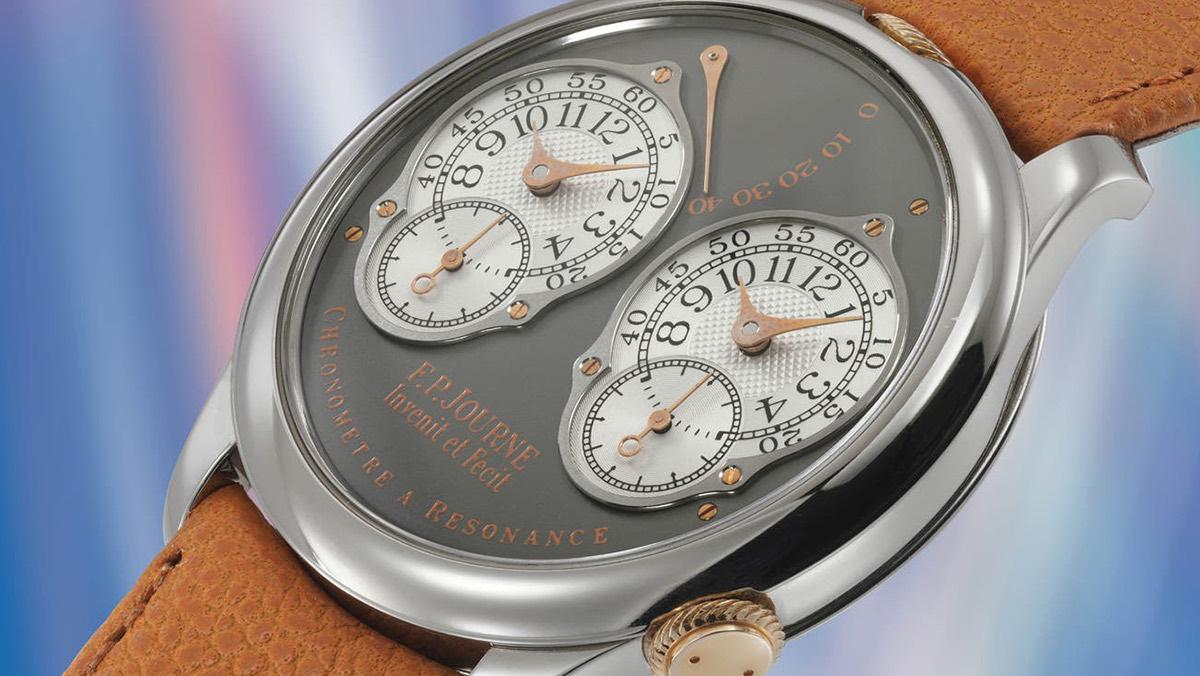
Don't reprice a whole brand off three lots. The Régence is a near-unique dial; the Tokyo Boutique is a limited boutique edition; the Vagabondage III was number 1 of 10 diamond-set pieces.[4] [2] [9] None of those is a comp for a recent production Journe. My read: owners of production pieces will raise asks this week, and you should counter with trade comps, not auction headlines. The Daytona "John Player Special" landing inside its estimate shows what a well-understood market looks like.[1] [2]
The scale of the weekend matters for how clients will talk to you. A white-glove US$112.3 million sale with 24 records will show up in every group chat. That does not mean every watch in your case went up. It means rare, documented, fresh-to-market pieces found deep buyers in one room. Mid-market lots and common steel sports pieces live in a different market.
Risk first. F.P. Journe and the other independents in this sale are incredible watches, and they are really hot right now. That is exactly why you need to tread carefully. People selling them know they are hot, and people are really overpaying. I wouldn't bank on flipping a Journe dealer to dealer unless I got a crazy deal. This is more of a sold-order play. If you have clients for this kind of piece, source it for them. Personally, I wouldn't go out and stock these, especially if a lot of your business is dealer to dealer. It is risky. You really have to know what you are doing and be well-versed in this independent stuff.
I still think the play right now is to quietly diversify as a dealer. Rolex is what moves for most people, but I can feel this creep-up of the independent brands. That does not mean loading the case with Journe after a record weekend. It means widening the mix thoughtfully: knowledge first, and source against real demand, not against a headline.
The hammer math, worked through
Here is why the hammer matters. On the Régence, the CHF 7.1 million hammer carried 27% on the first CHF 1.6 million (CHF 432,000), 21% on the next CHF 5.4 million (CHF 1,134,000) and 14.5% on the last CHF 100,000 (CHF 14,500). That is CHF 1,580,500 of premium, which takes you to the CHF 8,680,500 headline.[5] [1] The consignor never sees the premium, and pays their own selling costs on top. If you are comparing an auction result with a dealer trade, compare hammer to trade, never headline to trade.
How I would use these results, step by step
- Strip the premium. Work from the hammer, as above.
- Ask if it is the same watch. Same reference, same metal, same dial, same condition, same papers. A near-unique dial or a boutique edition is not a comp for anything except itself.
- Look for the trades in between. One auction is one day in one room. Completed dealer trades of the same reference tell you more about what you can actually sell for.
- Treat it like a sold order. If you are going near these prices, have a real end buyer and a realistic number, not a hope that the trade market will absorb it. Independents at this level are not something I would sit on.
- Price the downside. Ask what another dealer would pay you for it next month if that buyer walks. That number is your real risk.
Risk scenarios
- A seller raises the ask on a production Journe because of the Régence. If you pay it, you are paying for a different watch's result. Counter with completed trades of the same reference.
- You pay a hot-room price and try to flip it dealer to dealer. Unless you got a real deal, the next offers come in below your cost, and your capital sits.
- You ignore independents altogether, or you dive in without knowing the category. Rolex still moves, but some of the interest is shifting. The risk is either missing that, or paying tuition in a thinner market you don't know well.
What to watch next
Christie's Rare Watches sale in Geneva on November 9 and Sotheby's Important Watches on November 8 and 9 are the next rooms to check against this total.[8] [3] Watch the hammer prices against estimates, and watch the mid-market lots, not just the records. That is where dealer pricing actually lives.
If you take independents on consignment, watch consignment covers how to set terms. Auction records move expectations first and trade prices later. Dealers tracking this can apply for access to Soda.
Questions dealers ask
How much did Phillips Geneva Watch Auction XXIV make in total?
US$112.3 million (CHF 92,045,568 / €100.8 million) across the two sessions on November 7 and 8, 2026, with all 217 lots sold. It was the first live watch auction to pass US$100 million.
What was the top lot at Phillips Geneva Watch Auction XXIV?
An F.P. Journe Chronomètre à Résonance 'Régence' in platinum from 2002 sold for CHF 8,680,500 including buyer's premium, on a hammer of CHF 7.1 million.
What is the buyer's premium at Phillips Geneva?
For this sale, 27% of the hammer up to CHF 1.6 million, 21% from there to CHF 7 million and 14.5% above, as published in Phillips' sale terms.
Should a dealer raise prices on production F.P. Journe after these results?
Not off these lots. The top Journe results were for a near-unique dial, a Tokyo Boutique edition and the first of ten diamond-set pieces. Price production references on completed trades of the same reference.
How much did the Patek Philippe Ref. 1436 in steel sell for?
CHF 6,267,000 including buyer's premium on 7 November 2026, on a hammer of CHF 5.1 million against a CHF 2 million to 4 million estimate.